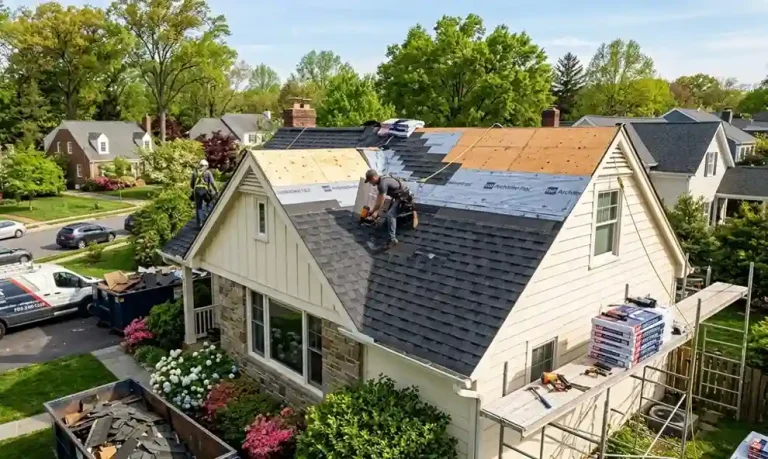

Quick Answer
After a storm damages your Arlington, VA, roof, do not get on the roof. Take photos and video from the ground before touching anything, place temporary plastic sheeting over any openings if safe to do so, and submit your insurance claim within 2-3 days. Choose a local licensed Arlington contractor over any out-of-area storm chaser who shows up at your door uninvited. From that point on, the repair and insurance process will go more smoothly depending on what you do in the first 48 hours.
Introduction
Storms in the Northern Virginia area are fast and powerful. Wind events, hail, and heavy rain regularly hit the DC metro area, and they don’t warn which roofs they are going to damage. The first 24 to 48 hours after storm damage occurs to your Arlington, VA home can make a huge difference. The right steps can prevent further water damage. Ensure that you have proper documentation of the situation for your insurance claim, and place you in a position to have the storm damage roof repair in Arlington, VA, done correctly, not quickly.
If you take the wrong steps or no steps at all, water will keep getting in until you’re ready.
Step 1: Stay Safe and Do Not Get on the Roof
Roof surfaces can be covered with debris, broken materials, or areas that are structurally compromised after a storm, but are not discernible from the ground. Never go on your roof to check the damage. The danger of falling from a wet or damaged surface is a reality, and a preliminary assessment is not worth it.
Check for immediate safety concerns from the ground and from inside the home first. Check for downed power lines near the house, for any gas odor, and for any new water stains on the ceiling in each room on the top floor. The interior signs are usually the most obvious early clues to the location of the roof’s breach.
Step 2: Document Everything Before Anything Is Touched
Documentation is the key to making a successful insurance claim. Start before any cleanup or temporary repairs happen, because once materials are moved or covered, the adjuster has only your photos to work from.
Photos and Video From the Ground
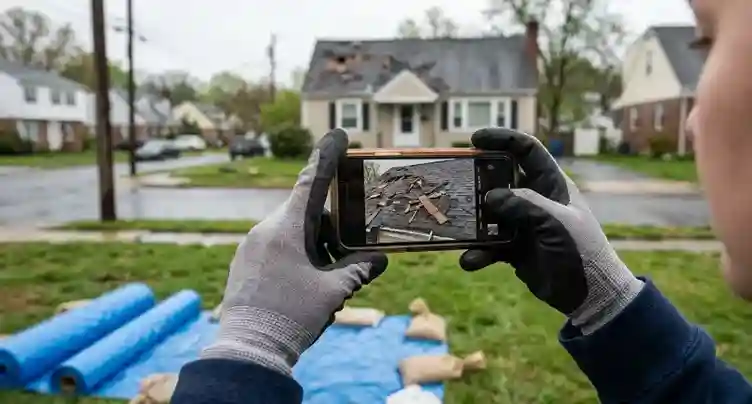
Take a walk around the entire house and take pictures of everything you can see from the ground. Any missing shingles, lifted sections, hail dents, damaged gutters, and any debris that has fallen on the roof must be captured. Walk while taking continuous video, as it can capture information that the photos may not. Ensure that the date and time are included in the file metadata, since the insurance adjuster will check that the documented damage is a match for the date and time of the storm.
Inside the Home
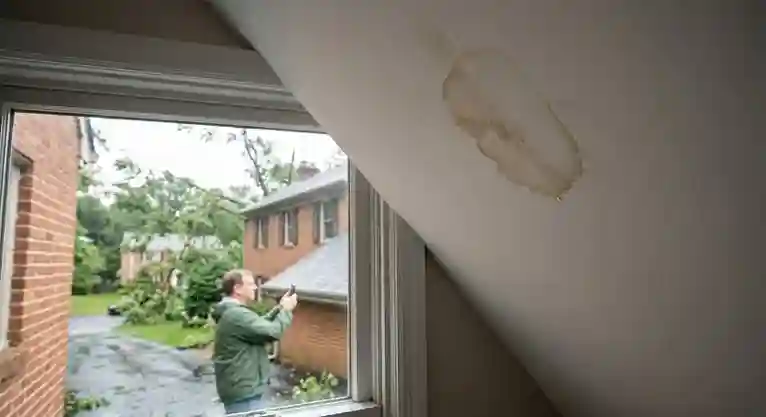
Take pictures of all new ceiling stains, wet spots on walls, and water on floors in all rooms. Use a flashlight to inspect the attic, and record any additional moisture, active dripping, or daylight through the decking. Record the location and approximate size of all interior damage areas, as these photos will tie roof damage to interior water intrusion in the adjuster’s mind.
Damaged Personal Property
If personal property was damaged by water that entered the roof, take photos of the property in place before moving it. All of these are contributing factors to the damage and should be documented in your claim.
Step 3: Apply Temporary Protection If It Is Safe to Do So
When openings in the roof are apparent, and additional rain is expected, the additional water is limited by temporary protection. Plastic sheeting can be applied from the ground or from a ladder at the edge of the roof, but should not be walked on to apply. If you cannot safely cover the area without getting on the roof, wait for a contractor.
A local Arlington roofing contractor can often provide temporary tarping within 24 hours of being called. Many people make this a priority, particularly following major storm events throughout the region. It helps to prevent further water damage until the extent of the damage is fully determined and the insurance claim is initiated.
Step 4: Call Your Insurance Company
Submit the claim as soon as possible after the storm. Most policies call for notification within a reasonable time after the weather event, and weeks are ample time for the insurer to question whether the storm caused the damage.
Be prepared with your policy number, the date and approximate time of the storm event, a description of what you saw, and the photos and video you already took. Inquire from the representative about the claims timeline and when an adjuster will be assigned to your claim.
The adjuster inspection is a crucial part of the claims process. The adjuster inspection is an important component of the claims process.
An insurance adjuster will call you to arrange an inspection of the damage that is covered by the insurance. You are allowed to have your roofing contractor present during this inspection, and it is strongly recommended that you do. A local contractor will be able to identify storm damage that an adjuster may mistake for wear and tear. They know the difference between failure due to the storm and failure due to age and can make a strong case for what is covered in the claim. Never sign anything the adjuster offers without knowing what it includes, as the initial settlement offer may not be the last.
Step 5: Choose Your Contractor Carefully
After a major storm, Northern Virginia fills with roofing contractors from outside the region. Some travel just to take advantage of storm volume in the affected areas, such as Georgia, North Carolina, or Tennessee. They are usually referred to as storm chasers and are quick, cheap, take jobs from numerous neighborhoods,s and often leave before any warranty problem arises.
How to Identify a Storm Chaser
They show up at your door within a day or two of the storm and pressure you to sign a contract right away, sometimes even taking care of the insurance claim for you. They do not have a local physical address, a local phone number, or an out-of-state license plate. That is a combination of signs that is consistent in almost all storm chasing situations.
Why a Local Arlington Contractor Is the Right Choice
A contractor who has been around for years in Arlington County has a reputation to maintain and is not about to leave after the work is finished. They know the Arlington County permit requirements and will obtain the necessary permits for the job. If a warranty problem arises in the future, within 6 months or 2 years, they are available. Request Virginia contractor license verification from DPOR, insurance certificates, and references from local Arlington jobs. A contractor with a real track record here will provide all three without hesitation.
Step 6: Understand Your Insurance Settlement Before Signing
When your insurance company sends a settlement letter, review it carefully before agreeing to anything. The settlement will typically show the replacement cost value of the roof minus your deductible, and may also show an actual cash value figure, which accounts for depreciation on an older roof. That depreciation can make the payout much less than the cost of the repair on an old Arlington house.
Your contractor may be able to assist you in filing a supplemental claim if the settlement is not sufficient to cover the extent of repairs you need. Supplemental claims are common when damage is more extensive than the initial adjuster assessment captured. However, do not let any contractor add on work that is not storm-damaged, as this is insurance fraud, and you, as the homeowner, will be held liable for the legal repercussions.
Common Storm Damage Patterns in Arlington, VA
Wind Damage
High winds pick up and tear off shingles from the underside of the roof. Shingles that are not completely missing can also be cracked or broken at the nail line, so that water can seep in through an imperceptible opening from the ground. The wind-lifted shingles around valleys and ridges are especially prevalent throughout Arlington, as they are exposed to the wind the most and are the first to fail before the main field of the roof holds.
Hail Damage
Hail damage in Northern Virginia is frequently not noticeable from the ground but is evident on the roof surface as round impressions with granules displaced around the perimeter. Hail impact and granule loss will shorten the life of the shingle from that time onward, even if the shingle doesn’t crack right away. This is determined by the adjuster and your contractor during the inspection, which is why it is important to have your contractor present at that meeting.
Falling Tree Debris
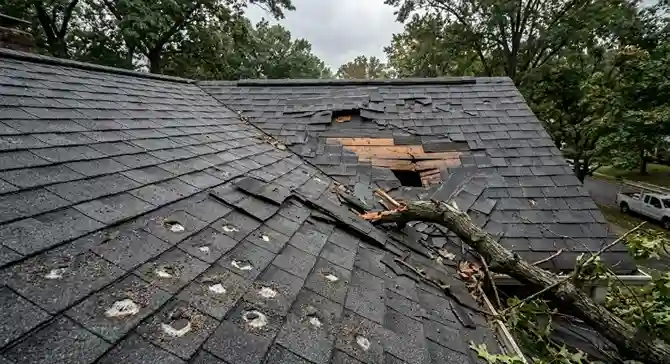
The tree canopy is a prominent feature of neighborhoods such as Ashton Heights and Lyon Village, and is a major storm roof hazard in Arlington. Large branches falling on a roof can crack roof decking, pierce underlayment, and dislodge or break several shingles in a small area. Even minor-looking branch falls can provide a direct pathway for water to enter the building.
FAQs
Does homeowners’ insurance cover all storm damage to my roof in Arlington, VA?
Coverage is dependent on the cause and the type of policy. Most homeowner’s policies in Virginia include coverage for wind, hail, and falling tree damage. Flooding is generally excluded from a standard policy and is covered by flood insurance. The extent of the age-related deterioration, even if it was exposed by a storm, can be excluded in part or in full based on the adjuster’s evaluation of the roof’s condition at the time of the storm.
How fast do I need to file a storm damage claim in Virginia?
Most insurers will need to be notified after the storm has passed, and waiting weeks or months could give the insurer reason to question whether the damage was caused by the storm or not. To ensure a clear timeline and a simple claim, file as soon as you have documented the damage, preferably within 2-3 days of the event.
Can I choose my own contractor for a storm-related repair?
Yes. Your insurance company may suggest preferred contractors, but you are not obligated to use them. You can use any licensed contractor you want. Ensure your contractor is familiar with insurance restoration and can communicate directly with your adjuster if additional claims are needed throughout the restoration process.
My roof was already older before the storm. Will insurance still cover?
Maybe, but the settlement amount could be reduced for depreciation since an older roof has less value in insurance terms. The age and condition of the roof will be taken into account by the adjuster in determining the settlement. It’s best to have your contractor distinguish between storm damage and pre-existing conditions, so you have the best possible argument for maximum coverage.
What if I don’t agree with the insurance adjuster’s decision?
The finding can be challenged via a public adjuster or, where applicable, by appraisal or mediation as per the policy. A local roofing company with experience in insurance restoration can help you determine if the insurance adjuster overlooked any items that should be covered in your claim.
Conclusion
The most important thing you can do immediately if your Arlington, VA, roof was damaged in a recent storm is to get it documented and inspected before the next storm hits. Water that enters through storm damage does not stop at the shingles. It penetrates the decking, the insulation, and, ultimately, the house itself, and each day that it is ignored contributes to the repair bill.
When you have a local contractor with knowledge of Arlington County, the insurance claim process, and who isn’t going anywhere after the job is finished, the process itself is manageable. We have been repairing roofs in Arlington, VA, neighborhoods for years after storms and will guide you through the process from start to finish, including the insurance settlement process.
Give us a call at (703) 386-7359 for a roof inspection. We will document the damage, assist you with the insurance process, and seal your roof before the next storm arrives.