

Quick Answer
Climate is one of the biggest factors determining how long a roof lasts. Over the years in the Mid-Atlantic and Northeast, shingles and flashing separate due to freeze-thaw cycles. Gulf Coast homes are exposed to humidity, algae growth, and wind uplift from tropical storms. Hail impact and extreme temperature fluctuations are a challenge for Midwest roofs. UV breakdown and thermal shock are issues for Desert Southwest homes. Persistent moisture and moss in the Pacific Northwest.
Different materials, installation techniques, and maintenance regimes are required in each region. Local climate knowledge is what separates a contractor who installs a roof from one who builds a system that lasts.
Introduction
The sky puts pressure on your roof all day long! But here is what most homeowners never think about. The weather in Arlington, VA, is very different from the weather in Phoenix, New Orleans, or Seattle. A good roofing job in one climate may be a poor one in another. It’s not a fault of the materials. It is a mismatch between what the roof was built for and what the climate actually demands.
Roofing contractors face some formidable adversaries all across the United States. Freeze-thaw cycles in the Mid-Atlantic. Strong winds of hurricane force along the Gulf Coast. In the desert Southwest, constant exposure to the U.V. rays. Ongoing moss and wetness across the Pacific Northwest. The same materials are subjected to different types of stress in different regions.
This guide by Arlington Roofing Team will explain how climate affects roof performance nationwide and what it can mean for the maintenance, repair, and replacement of roofs.
The Mid-Atlantic and Northeast Freeze-Thaw Is the Real Enemy
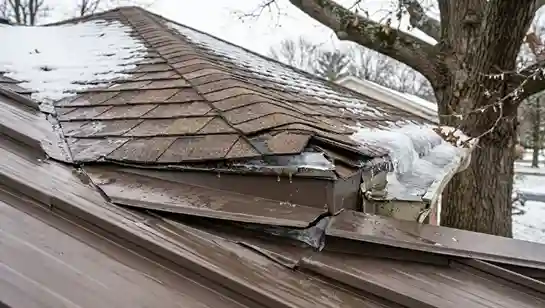
In some states, such as Virginia, Maryland, Pennsylvania, and New York, the greatest risk to a roof is not a single event of extreme weather. It’s the repeated slow freeze-thaw cycle during the winter.
Here is what happens. Water enters under shingles through small areas, such as around flashing, around seams, and along the edges of the roof. As the temperature drops at night, that water freezes and expands. At times of rising temperatures during the day, it thaws and shrinks. This process happens dozens of times every winter and makes the gaps a bit wider each time.
As time goes by, shingles rise. Seals break. When flashing separates from the surface to which it was bonded. A hairline crack will become a working crack.
Ice dams are another related problem in the Mid-Atlantic, in particular. A poorly ventilated attic will heat the roof deck and melt snow close to the ridge when heat is lost from the roof. The meltwater flows down towards the eaves w, which remain cold, and refreezes in a ridge of ice. The result is an ice dam that pushes water under the shingles. Water under the shingles is a bad thing.
The combination of the freeze-thaw cycle and the aging of the tree canopy increases shingle wear even more than the age of the roof. The freeze-thaw cycle and the presence of mature trees, which add debris and moisture to the roof surface, increase shingle wear even further than simply roof age.
Arlington and Northern Virginia homeowners can track local storm events and seasonal weather patterns directly through the National Weather Service Baltimore-Washington, the official NWS office covering the DC metro area.
Humidity, Heat, and Hurricane Force in the Gulf Coast and Southeast
Head south to Louisiana, Mississippi, and Alabama, as well as the Florida Panhandle, and the climate changes.
Most of the freeze-thaw cycle has been eliminated. What takes its place is something that can be even more damaging to roofing materials: constant heat, high humidity, intense seasonal rainfall, and the constant risk of tropical storms and hurricanes.
Roofs in high-humidity environments have another moisture issue. It is not when water enters through cracks when it’s freezing. It is always wet, never dry. Algae and moss grow on shingles much more rapidly in the Gulf Coast area than in cooler and drier climates. The biological growth not only looks bad, but it also retains moisture on the surface of the shingle, which promotes further loss of granules.
The other significant factor is wind uplift. Standard asphalt shingles have a specific wind rating, and if you live in hurricane-prone areas, these ratings are indeed significant. What may be minimally acceptable in Virginia may be quite inadequate in coastal Louisiana.
For a deeper look at how roofing systems are designed for hurricane zones, the team at Gulf Coast Roofing Specialists in New Orleans Roofing covers these regional challenges in real detail.
So if you ever wondered why the material and fastening techniques used by New Orleans contractors are different from those used by Virginia contractors, here’s the reason. The climate requires it.
The Midwest, Wind, Hail, and Temperature Swings
Roofing in the Midwest is particularly challenging because of the mix of threats faced by states such as Kansas, Missouri, Nebraska, Oklahoma, and Illinois.
The main concern is hail. The central United States is in hail alley, where the conditions that make large hail more likely than in nearly any other part of the country are more common. One hailstorm can affect a whole neighborhood and result in thousands of insurance claims at a time.
Hail damage may not be apparent from the ground. Shingles can take a lot of abuse, losing granules, cracking the mat underneath, without being apparent until a year or two later, when leaks start to occur.
Impact-resistant shingles, rated Class 3 or Class 4, are not a premium upgrade in the Midwest. They’re the practical option for many homeowners, and some insurance companies will even give you a discount on your premiums if you install them.
The second factor is temperature fluctuations. Summers in Kansas City often reach the high nineties,s and winters can get quite cold, well below freezing. The extreme temperature swings can cause roofing materials to expand and contract throughout the year, which can create stress on seals, fasteners, rs and the shingle adhesive strips that keep it flat.
A roof installed in the Midwest needs to be able to handle both extremes, not just one end of the spectrum.
The Desert Southwest – UV Damage and Thermal Shock
When it comes to roofing, most people outside the region don’t realize the climate in Arizona, Nevada, New Mexico, and portions of Southern California.
The sun is unrelenting. The
Desert Southwest desert exposure is high all year long. Asphalt shingles rely on the granules covering them to reflect the ultraviolet rays and to protect the asphalt layer underneath. That granule layer is more quickly degraded in climates with extreme solar exposure than in milder climates. A 25- to 30-year-old shingle installed in Virginia can be in need of replacement in 15-20 years in Phoenix.
The problem is related to thermal shock. Day and night temperatures can vary by 40 or even 50 degrees in the desert. A roof surface that heats up to 170 degrees in the afternoon sun and cools rapidly at night is constantly stressed. That stress over time makes the roofing material crack and become less flexible.
That’s why clay tile and concrete tile are so prevalent in the Southwest, and not only for their beauty, but because they are much more resistant to UV and thermal stress than regular asphalt shingles. Cool roof coatings and reflective materials are also popular for lowering the surface temperature of the roof during the hottest hours of the day.
Pacific Northwest, Moss, Rain and Constant Moisture
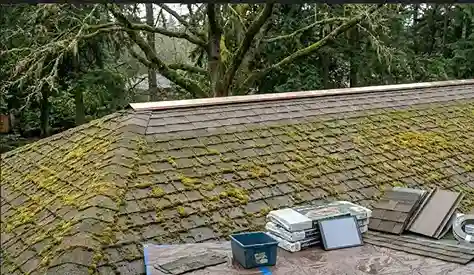
Washington, Oregon, and Northern California offer another unique set of challenges.
Moisture is the hallmark of Pacific Northwest roofing, not just storm moisture, but moisture from the low-level dampness that is a part of the Pacific Northwest climate. There are more than 150 days of rain each year in Seattle. Portland is similar. That continuous moisture creates ideal conditions for moss and algae growth on roofing surfaces.
Moss is more than a cosmetic issue. As moss grows, its root structure will physically lift shingles, allowing water to seep in between the shingle layers. If you have a roof that has a lot of moss on it, it’s a roof that’s working a lot harder than it needs to.
In this area, moss treatment and prevention are a regular part of roof maintenance, whereas it’s not in drier climates. Zinc or copper strips placed at the ridge line emit minute quantities of me,tal which run down the roof with the rain and prevent biological growth. Algae-resistant granules are also used for treated shingles.
Another factor in the Pacific Northwest is roof pitch. Low-sloped roofs allow water to run off slowly, allowing moisture to penetrate the surface. Rain falls off steeper pitches more quickly and provides less surface water for moss to grow on.
What This Means When You Are Hiring a Contractor
Here is the practical takeaway from all of this.
If a roofing company is recommending the same material for every homeowner, regardless of location, they aren’t providing you with the whole story. The type of roof that is best for your home will depend largely on the weather, temperature, moisture, and storm conditions in your region.
When talking with a contractor, ask them directly: What are the primary climate factors that I should consider on my roof? A contractor who is familiar with the local market will have a definite and specific answer. One who gives you a generic response about shingles lasting 25 years is worth pressing further.
One of the best assets a roofing contractor can offer a job is local knowledge. Materials matter. Installation technique matters. However, knowing what the local climate will be doing to your roof over the next 20 years is just as important.
Your roof is more than a roof of shingles. It’s a system that helps to shield your home from the weather conditions that you’re exposed to every year. Ensure that the contractor that you hire is aware of what those conditions are.
Conclusion
Your roof does not get to choose the climate it lives in. However, you can choose its level of readiness. In Northern Virginia, that means understanding freeze-thaw cycles, aging housing stock, and winters that are harder on shingles than they look. The right contractor knows all of that before they ever climb a ladder.
If your roof has been through a few Arlington winters and you are not sure what condition it is in, a full roof inspection is the right place to start.
Arlington, VA Roofing serves homeowners and property owners throughout Arlington, Virginia, and the surrounding Northern Virginia area. If you have questions about your roof and how Northern Virginia’s climate may be affecting it, call us at (703) 386-7359 or visit arlingtonvaroofing.com.


