Introduction
A roof leak doesn’t usually announce itself. It is usually present for weeks or months without any signs of a homeowner noticing it. Insulation is already wet, wood is beginning to rot, and mold is likely to be forming in an area that is not visible. The initial repair, which may have been a few hundred dollars, has become a much more costly affair.
The bright side is that all roof leaks have early signs. It only takes a little knowledge.
Why Roof Leaks in Arlington VA Are So Easy to Miss
Slow, hidden leaks are common in Northern Virginia due to the weather. Shingles, flashing and seals are subjected to a tremendous amount of stress during the winter months due to the freeze-thaw cycles. A small crack that opens in January may not allow water to enter until a big spring rain in March.
By then, the water has been sitting in the underlayment for weeks before it ever reaches your ceiling. The time between when a leak begins and when it is discovered inside is why it is so important to detect the early signs.
Arlington experienced heavy summer rainfall events, which were both intense and rapid. They reveal weaknesses in valleys, around chimneys, and at pipe boots that lighter showers would never expose.
What to Look for in Your Home to Indicate a Roof Leak
Water Stains on Ceilings or Walls
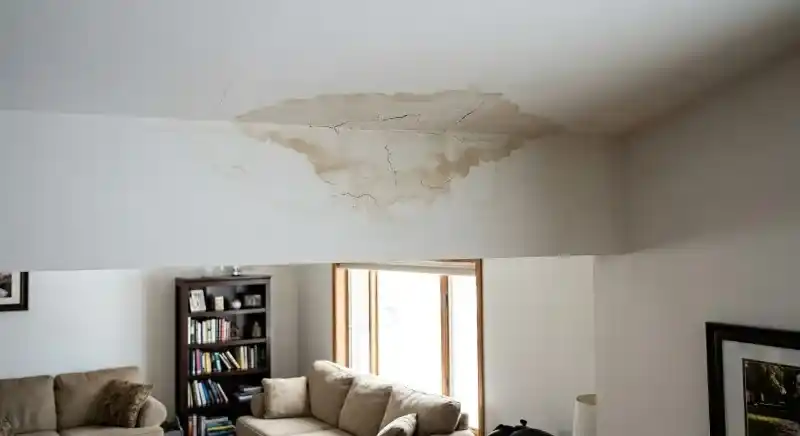
This is the most apparent sign but is not always the location of the leak. Water runs over roof decking and rafters and falls on your ceiling. A stain in the middle of your living room ceiling may be caused by a leaking pipe boot or a broken section of flashing 10 feet away in another direction. Never assume that the leak is directly above the stain. It rarely is.
Dark Spots or Streaks in the Attic
When it comes to roof leaks, your attic is the most valuable diagnostic area of your home. When it rains, climb up there with a flashlight and inspect the bottom of the roof decking. If the wood is stained, the insulation is wet, or there is any sort of light penetrating the decking, it is a sign that water is entering the house.
If you don’t notice any dripping, water stains on the rafters and decking will indicate the location of the entry point. The stains get darker and darker over time, providing you with a map.
Damp or Musty Smell in Upper Rooms
If the bedroom is on the upper floor or the ceiling of the bedroom has a musty odor, it is a serious indicator. It indicates that moisture has been present for a long enough period to begin the degradation of organic matter. That process almost always starts with the mold beginning to grow, even if you don’t see it yet.
Don’t cover up the odor with air fresheners and then ignore it. Trace it. Go to the attic and check it out.
Peeling Paint Near Ceiling Lines
When water infiltrates the roof and soaks into the ceiling drywall, it eventually pushes through to the surface. Paint may bubble, crack or peel on the ceiling or at the top of a wall. The areas are usually soft or spongy to the touch. The softness indicates that the drywall behind has already absorbed a lot of moisture.
Higher Energy Bills Without Explanation
This one is not as easy to understand, but it’s very true. If water gets into your attic insulation through a leak in the roof, the insulation will not work very long. Your heating and cooling system will need to run more to keep the temperature. When the utility bills have risen during the winter without any other obvious cause, it’s time to inspect the attic insulation.
What to Look for in a Roof Leak from the outside
Missing, Cracked, or Curling Shingles
Go around your house and take a look up. These problems can be seen from the ground without climbing up on the roof. Shingles that are missing are easy to see, with gaps in the roofing surface. Just one missing shingle in the right place allows rain to fall directly on the underlayment and decking.
Shingles are curled up at the sides or in the center. That curling is a sign that the shingle is no longer flat against the decking and has become inflexible. Water gets underneath.
Many roof pitches can also be seen from the ground with cracked shingles. Cracking occurs when the asphalt has dried out and the shingle is nearing the end of its useful life.
Granules in gutters
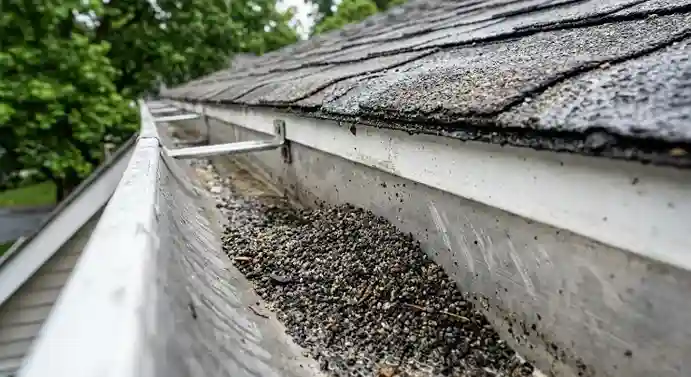
When it rains, inspect the downspouts or gutters for anything that is draining out. If there are lots of dark, gritty granules, your shingles are losing their protective layer. Those granules are what keep the asphalt layer below from being damaged by the sun and impact. After they are removed, deterioration occurs rapidly.
A certain amount of granule loss is expected over the life of the product. If granules are falling off the shingles in large numbers from the gutters, the shingles are close to the end of their useful life.
Damaged or Lifted Flashing
Flashing is the metal material used at all roof penetrations, at all valleys and at all roof-to-wall or chimney connections. It is the most common source of roof leaks in Arlington homes. Check for any gaps in the flashing where it meets the chimney or wall, or if it is lifted, bent, rusted, or otherwise visible. Water can flow directly behind the flashing and into the roof system even with small separations.
Many older houses in Ashton Heights, Cherrydale and Lyon Village have original lead or aluminum flashing that is decades old. These materials are not indestructible.
Sagging Areas on the Roof Deck
The roof surface should be level and smooth. If there is any sagging or dipping between the rafters, it is a serious warning sign. The sagging indicates that the decking below has been absorbing moisture for a long time and has started to lose structural integrity. The problem has usually progressed beyond a simple repair at this point. This is a situation that needs to be addressed immediately.
The Most Common Sources of Roof Leaks in Arlington VA
Pipe Boots and Roof Penetrations
All plumbing vents, exhaust pipes and gas lines that go through the roof are fitted with a rubber or plastic boot that seals the roof to prevent water from leaking through. Over time, those boots crack and break, particularly with the temperature changes in Northern Virginia. A failed pipe boot is one of the most common sources of roof leaks found on Arlington homes. The bright side is that it’s also one of the least costly to repair if it’s caught early.
Chimney Flashing
One of the most vulnerable areas of any house is the connection between the chimney and the roof. The proper step flashing, counter flashing and in many instances a mortar or sealant detail at the top are the basis of chimney flashing. Any one of those layers can fail. Many older chimneys in Arlington neighborhoods are simply worn out flashing that was installed many years ago.
Valleys
Roof valleys, where two roof planes converge and direct water to the gutters, have the highest water volume of any other roof area. When the valley flashing or valley shingles are failing, they are allowing water to flow directly into the roof’s highest traffic area. Leaks from valleys may be visible at a distance from the leak site, as water travels along the valley for several feet before falling.
Ice Dams in Winter
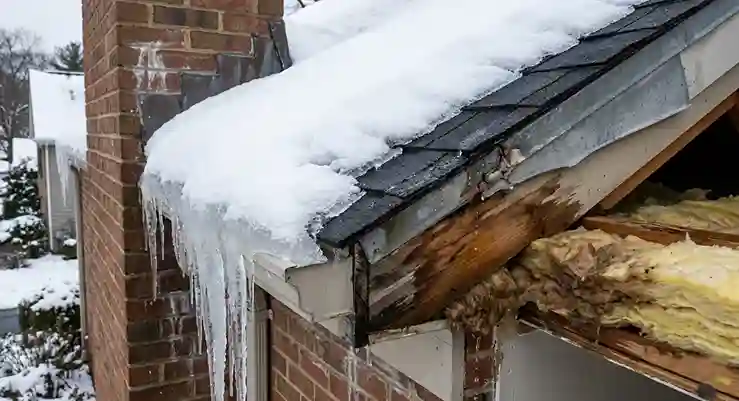
This is a problem unique to Arlington that worsens during snowy years. If the attic is not insulated, heat will escape through it, causing snow to melt on the roof. That melt water flows to the cold edge of the eave and refreezes. The ice dam blocks drainage and water accumulates under the shingles.
Ice dam damage is manifested by water stains on the outside of ceilings on upper floors, usually in late winter or early spring when temperatures start to vary.
What to Do When You Suspect a Roof Leak
Do not wait to see if it gets worse. It will. Take photos of any interior stains or damage you can see. Note the location and size. If it is safe to do so, check the attic with a flashlight during or immediately after the next rain. Contact a local roofing company to inspect the roof. A good Arlington contractor will come to your home to examine your roof, explain what they see, and tell you what is causing the problem and how to correct it.
If you are not a roofing professional, do not climb on the roof yourself. Injury is a possibility and walking on broken shingles in the wrong place can exacerbate the issue.
When a repair is enough and when it is not
If the leak is localized, the cause is obvious and your roof is less than 15 years old, then a spot repair is typically the best solution. When the roof is more than 20 years old, when the leak is from more than one source, or when the damage has permeated the roof decking or insulation, a repair is only treating the symptom and not the cause. In those cases, a thorough inspection is required to provide you with a realistic idea of what the roof can do.
Conclusion
Think your roof might be leaking? Call (703) 386-7359. Arlington VA, Roofing is your local team for everything from roof repair and replacement to gutters, siding, and commercial roofing across Arlington County. We’ve seen it all and know how to fix it the first time, from aging flashing in Ashton Heights to pipe boot failures in Cherrydale.