

Direct Answer
After a storm in Arlington, VA, the most important signs to look for are missing or lifted shingles, granule buildup in gutters, damaged or bent flashing, water stains on interior ceilings, and dented gutters or downspouts. Don’t wait for an active drip to show up in the interior. Many roof issues that can cause water to enter the building occur long before a visible leak develops in the living space.
Introduction
The weather can be harsh for everyone in Northern Virginia. Nor’easters and late-summer thunderstorms. Hail in spring and ice storms in January. High winds from fast-moving fronts roll through Arlington neighborhoods with very little warning.
Once the storm has passed, most of the homeowners do a quick look around in the yard and move on. But storm damage to a roof is not always visible from the ground. Deferring action until it is found means water may already have infiltrated into the structure.
This guide will discuss what to look for, how to do it safely, and what to do if there is roof damage after a storm or find something different.
Why Post-Storm Roof Inspections Matter in Northern Virginia
Arlington County experiences considerable wind and occasionally heavy hail. Asphalt shingles lose granules and surface dents, which are not evident from the ground due to hail up to an inch in diameter. Strong winds over 50 mph often raise the edges of shingle beds and tear away the seal strip anchoring them.
The damage from these events is real but often subtle. It may be weeks or months before a leak shows up in the home’s interior when it occurs.
What to Check After a Storm in Arlington VA
Missing or Lifted Shingles
Roughly trace the outline of your house from the outside and view the roof from the ground. Missing shingles are obvious. Lifted shingles will be more difficult to identify, and will look as edges or portions that are not flat against the roof surface.
Both conditions create immediate water entry points and should be addressed before the next rain event arrives.
Granule Buildup in Your Gutters
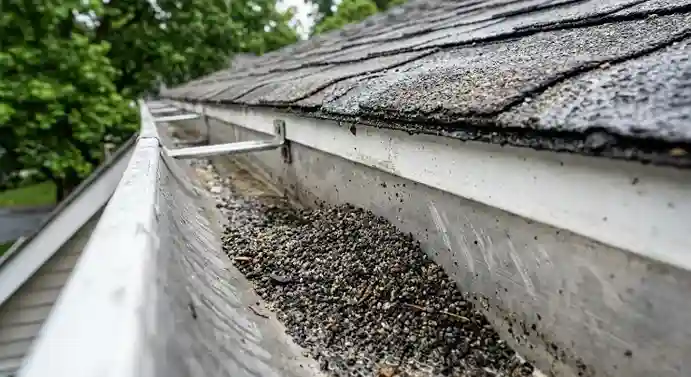
After a storm, check your gutters and downspout outlets. The granule layer on the top of asphalt shingles becomes loose when struck by hail and strong winds. If you can see substantial dark, gritty material in your gutters after a storm, then you can reliably assume the shingles have been damaged, even if the roof appears normal from the ground.
When granule loss occurs, the asphalt mat is left to be damaged by the sun, greatly reducing the lifespan of the damaged shingles.
Damaged or Bent Flashing
Flashing around chimneys, skylights, and wall transitions is particularly vulnerable to wind. Bent, lifted, or cracked flashing allows water to pass directly into the roof assembly at penetration points.
This type of damage is worth checking after any storm that produced wind gusts above 40 mph in the Arlington area.
Water Stains on Interior Ceilings or Walls
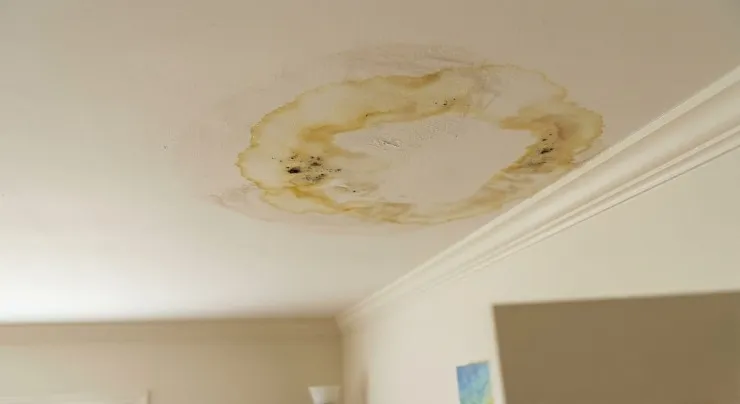
New water stains appearing on your ceiling or upper walls after a storm are a direct signal that water has entered the roof system. The stain site may not always be the site of entry since the water follows the structural members before it drips.
Take photos of each new stain and record the date. This is very important for insurance reasons.
Check Your Attic After Major Storms
The attic is the best early warning area for damage caused by storms. After a significant weather event, check your attic with a flashlight for daylight coming through any section of the roof boards, fresh wet spots on the decking or insulation, and new water staining on rafters or sheathing.
These signs confirm active water intrusion even before it reaches the living space below.
Dented Gutters and Downspouts
Hail large enough to dent gutters and downspouts is large enough to damage asphalt shingles. If your gutters or aluminum siding appear dimpled or dented after a storm, have an insurance claimable roof inspection done before any decisions are made.
Insurance adjusters will focus on damage that is correlated in the gutters, siding, and roofing to ensure that there is sound hail damage evidence to support the claim.
Damaged or Missing Vent Caps
Hail and high winds can damage roof vents, attic fan covers, and pipe boot caps. Check that all vent caps that are visible have been secured and in place after severe storms. A damaged or broken vent cap can allow water and pests to get into the attic.
What NOT to Do After Storm Damage
Do not climb onto your roof to inspect it yourself. Wet roofing is extremely dangerous, and damaged sections may not support the weight the way intact sections do.
Avoid a damage assessment by ground only. An inspection should involve a professional roofer who walks the roof surface and inspects the attic space.
Don’t begin cleaning or repairs without documenting thoroughly. Before pictures are needed for insurance claims. After work has started, it will be extremely difficult to accurately document the original damage condition.
NEVER hire a contractor who has come to your door after a storm. Out-of-state contractors routinely conduct door-to-door sales in Northern Virginia, and often fall short in quality or workmanship.
How to Document Storm Damage for an Insurance Claim?
Take pictures from the ground of the outside of the building from all available angles. Take pictures of any damage that is visible in the attic. Document granule accumulation in gutters. Use the data from the National Weather Service records for the Arlington, VA area to record the storm date.
Before calling your insurance company, secure an in writing evaluation from a licensed DPOR-registered Virginia contractor.
When to Call a Roofer vs When to Call Your Insurance Company
Contact the roofing company first. Get a written assessment identifying the cause and extent of damage. Take that information and speak with the insurance company.
The opposite scenario is also wrong, giving the insurance company a call before professional evaluation opens the door to getting less than you deserve in a claim. The adjuster’s evaluation is done in the insurer’s interest, not yours.
How Long After a Storm Can You File a Claim in Virginia
Policyholders in Virginia will generally have one to two years to submit a claim for damage to their property after a storm event, although there are some exceptions. Delay causes difficulties because adjusters will ask if the damage is due to a particular storm or to the general aging of the property.
Act within 30 days of the storm for the strongest possible claim position.
Conclusion
Just because you’re not seeing shingles in the yard doesn’t necessarily mean your roof is in good shape. The real damage is often subtle and invisible from the ground.
After storm damage, Arlington, VA Roofing offers post-storm roof inspections to Arlington County homeowners and Northern Virginia homeowners. We record in writing what we find, so you have the necessary information for your insurance claim. Following any major weather event, call (703) 386-7359.


